
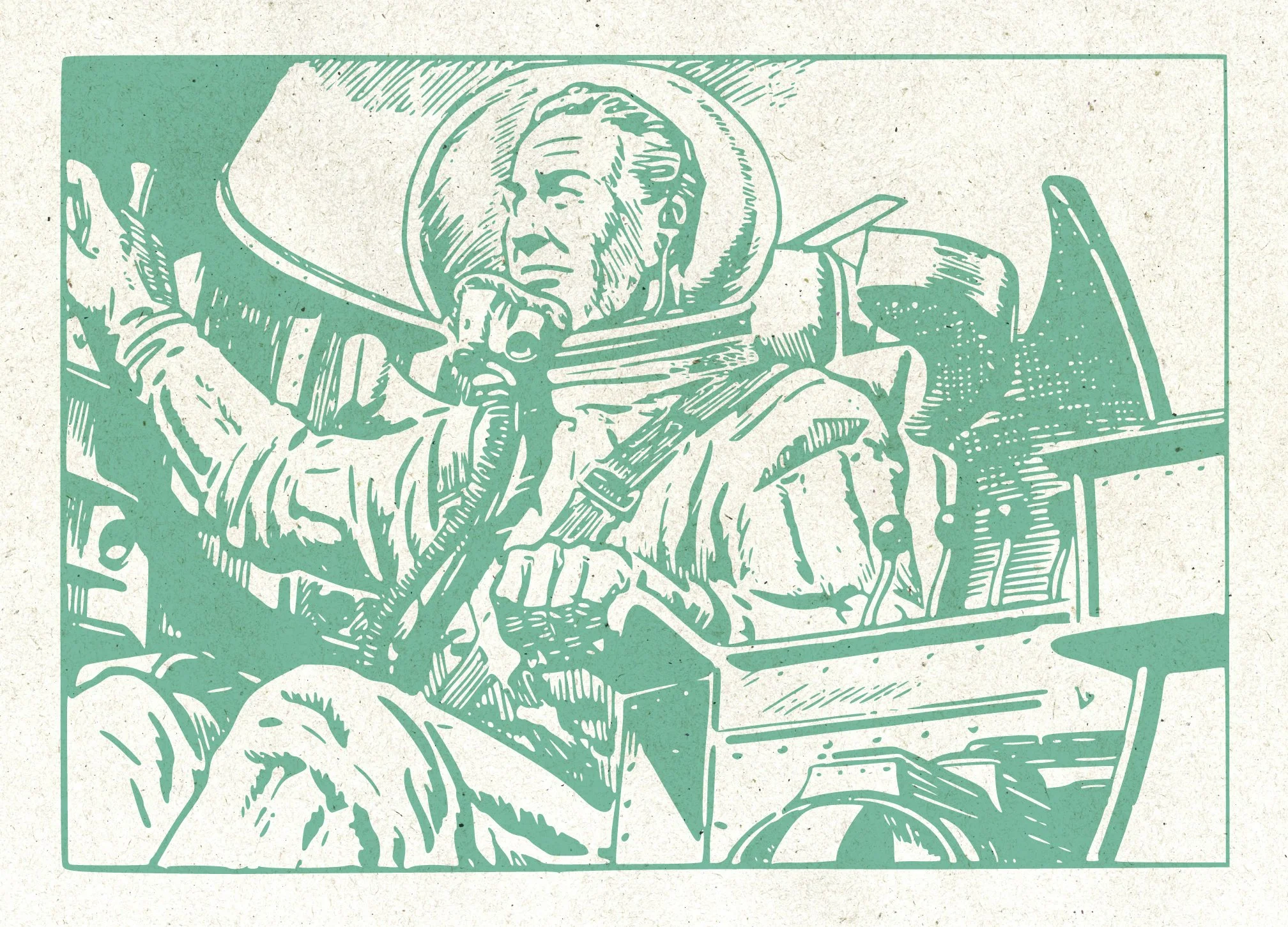

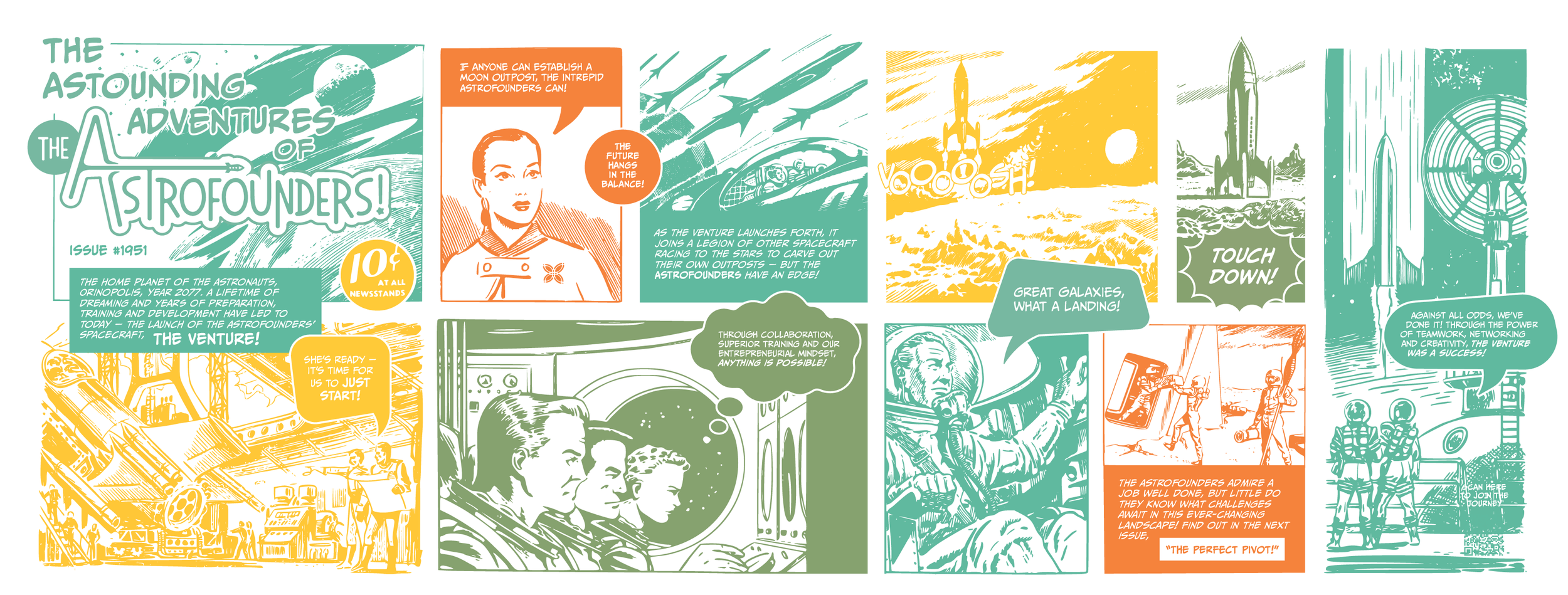
Against all odds, we've done it! Harnessing the power of collaboration and creativity, the venture was a success.
The Astrofounders, Issue #1951
a full visual identity emerged From 1951@Skysong, a retro coworking space with mid-century bones
-
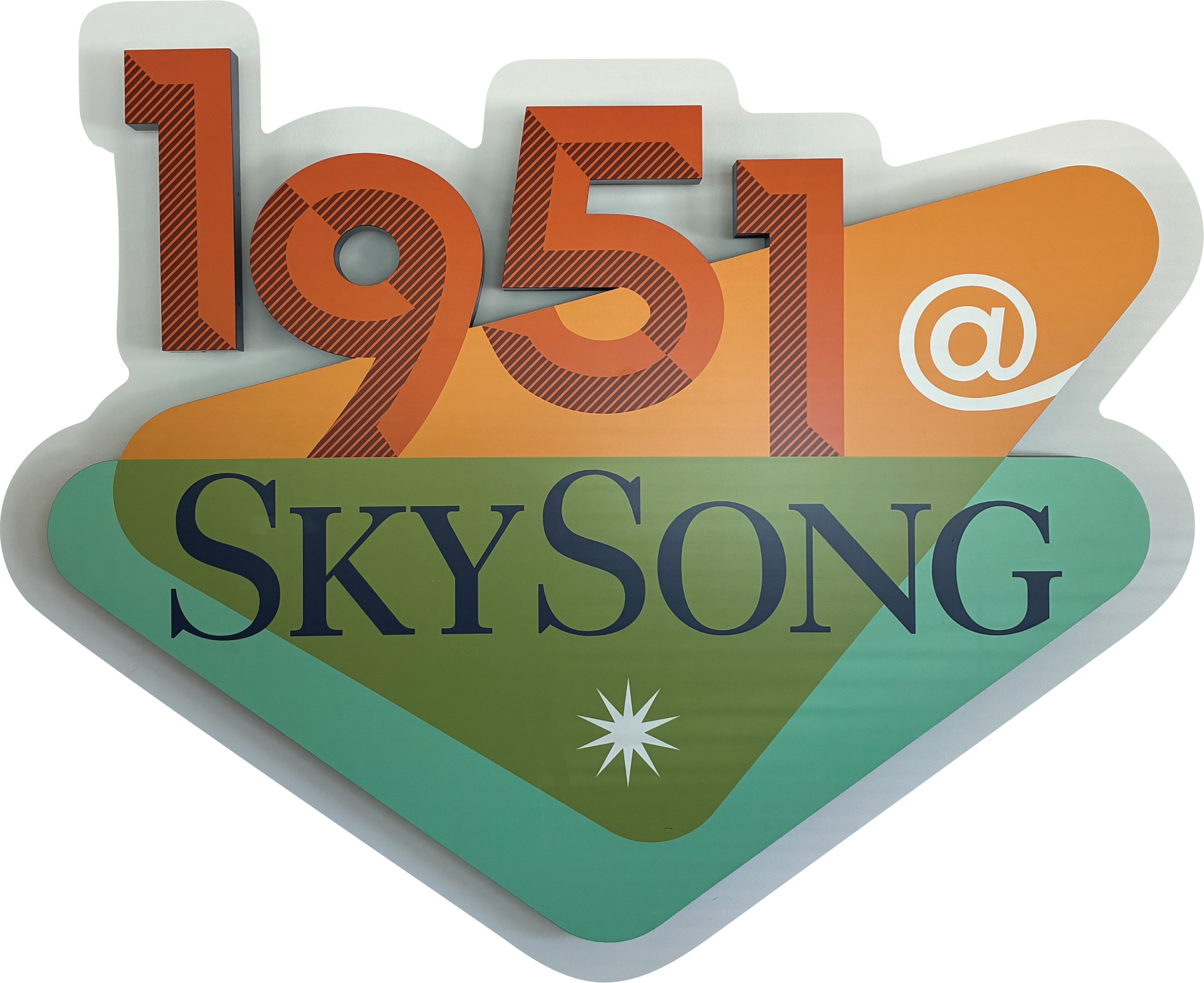
The J. Orin Edson Entrepreneurship + Innovation Institute at ASU approached our team to develop a comprehensive brand system for their coworking space, 1951@SkySong, located in Scottsdale, Arizona.
-
E+I came to us with a physical space already steeped in mid-century character but no cohesive brand system to carry that identity beyond its walls.
The challenge was to honor what already existed, extend it into a flexible visual language, and make it work across every surface from environmental murals to social media.
-
The work spanned a flexible design system, environmental graphics, social media templates, and one of the project's most celebrated outcomes: a full-scale comic wall installation.


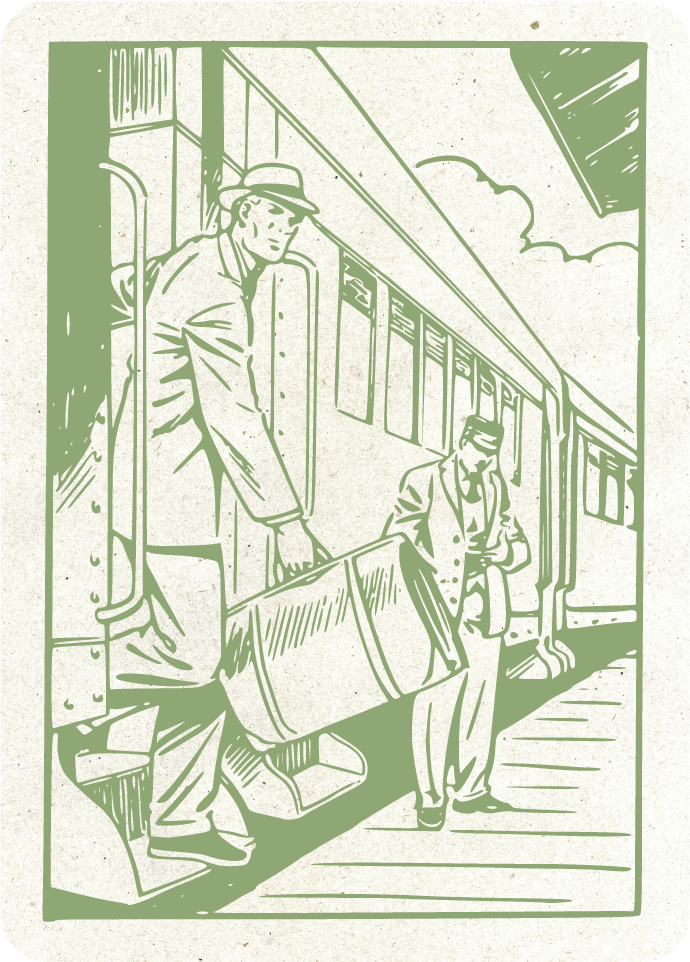
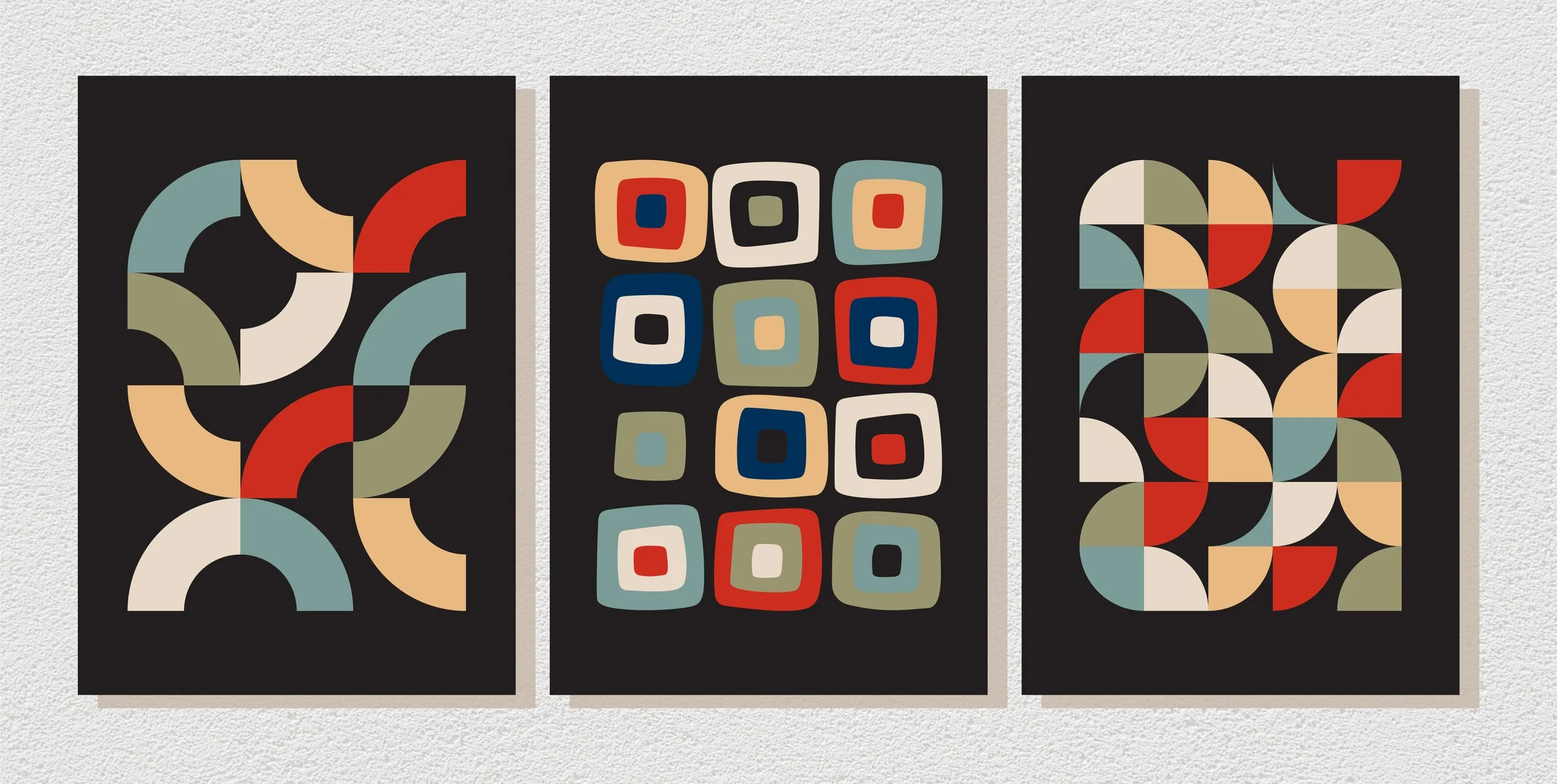



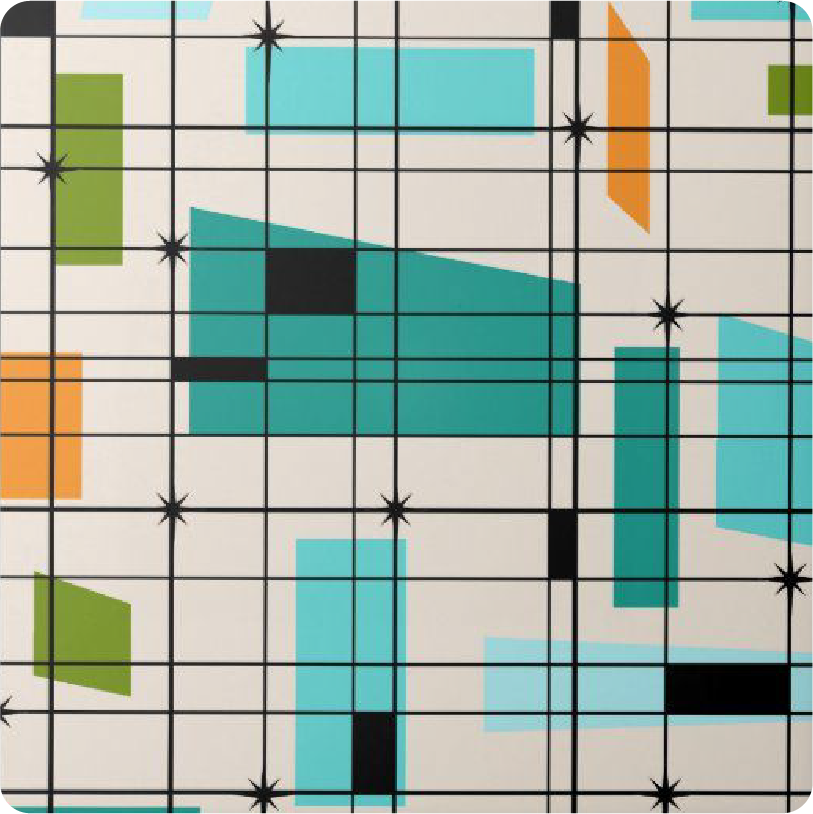
Visual research drew from the defining motifs of mid-century American design — atomic starbursts, interlocking organic shapes, bold grid patterns, and the warm, optimistic color palettes of 1950s commercial illustration. References ranged from retro typefaces and diner signage to Eames-era wall art and textile patterns, establishing a clear aesthetic vocabulary to build the 1951@SkySong brand system around.
discoverY


from values
to colors
Each color in the 1951 palette was deliberately mapped to one of E+I's core values — teal for community, orange for bold ideas, sage for empowerment, and gold for innovation. ASU gold was added to the palette to reinforce alignment with the university to ground the system in institutional identity.
A system with a story
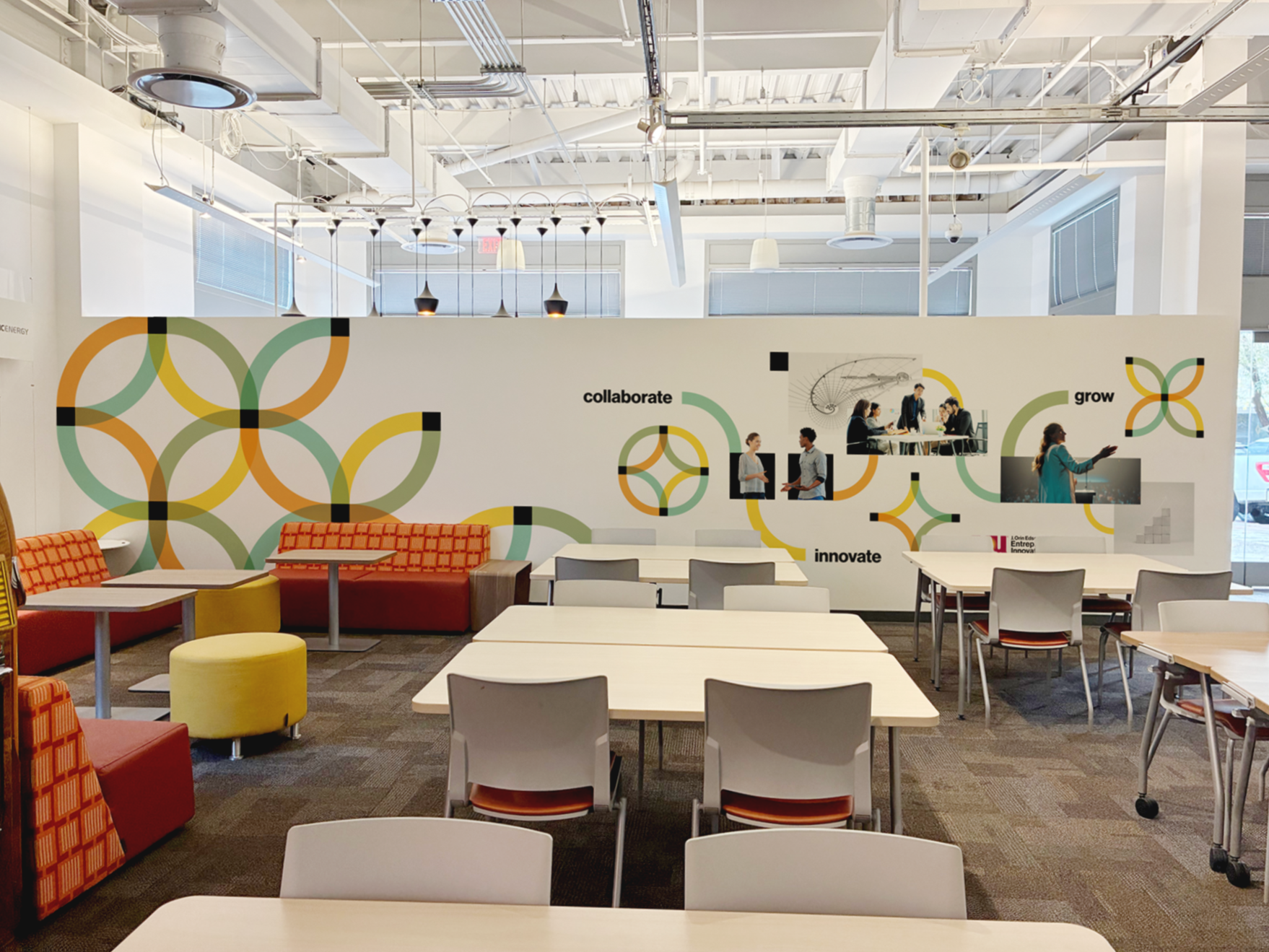
One of the most distinctive elements developed for this project was a visual narrative built entirely from interlocking arcs. Starting from a single square — representing one entrepreneur — the forms grow, curve, and overlap until they resolve into a full, symmetrical pattern that evokes community, collaboration, and growth. Watch the story play out below:
-
![]()
An entrepreneur
-
![]()
meets another entrepreneur
-
![]()
and they collaborate.
-
![]()
They meet another,
-
![]()
and another, continuing to collaborate.
-
![]()
collaboration creates community
-
![]()
Community sparks innovation
-
![]()
Innovation creates growth








Deliverables
ENVIRONMENTAL
DESIGNs
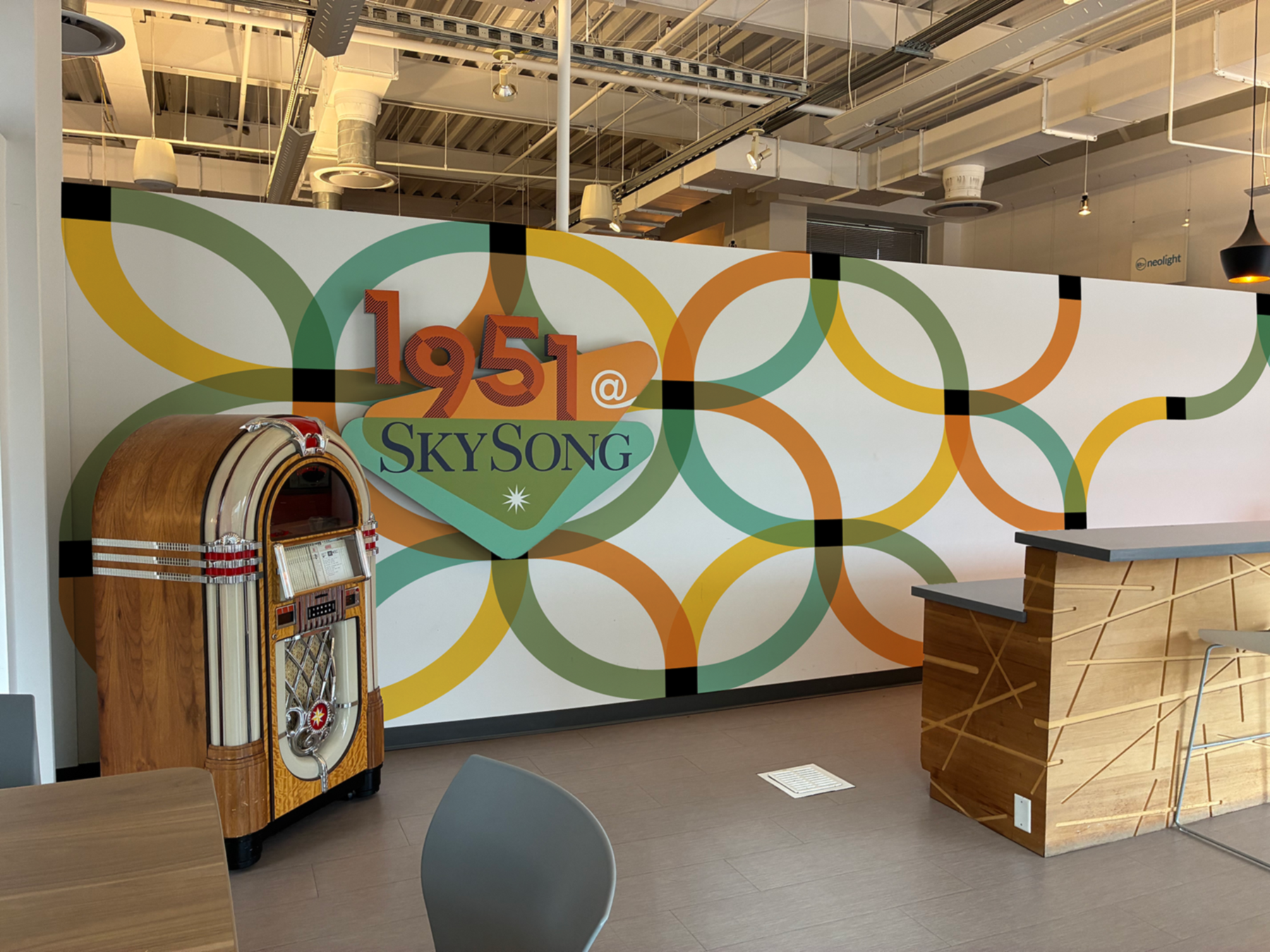
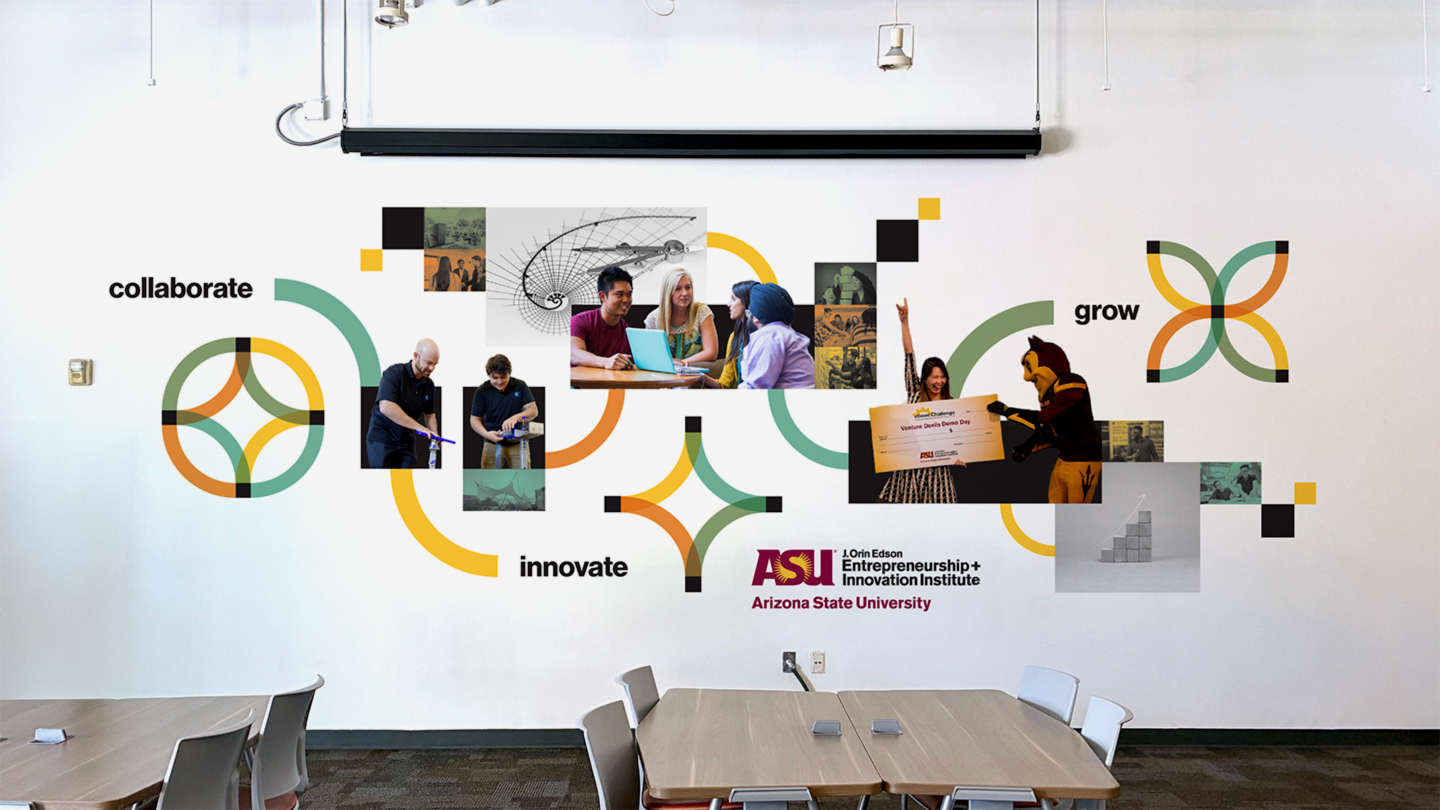
The physical space at SkySong set the tone. The design work extended the brand into the built environment, reinforcing the brand at every turn.

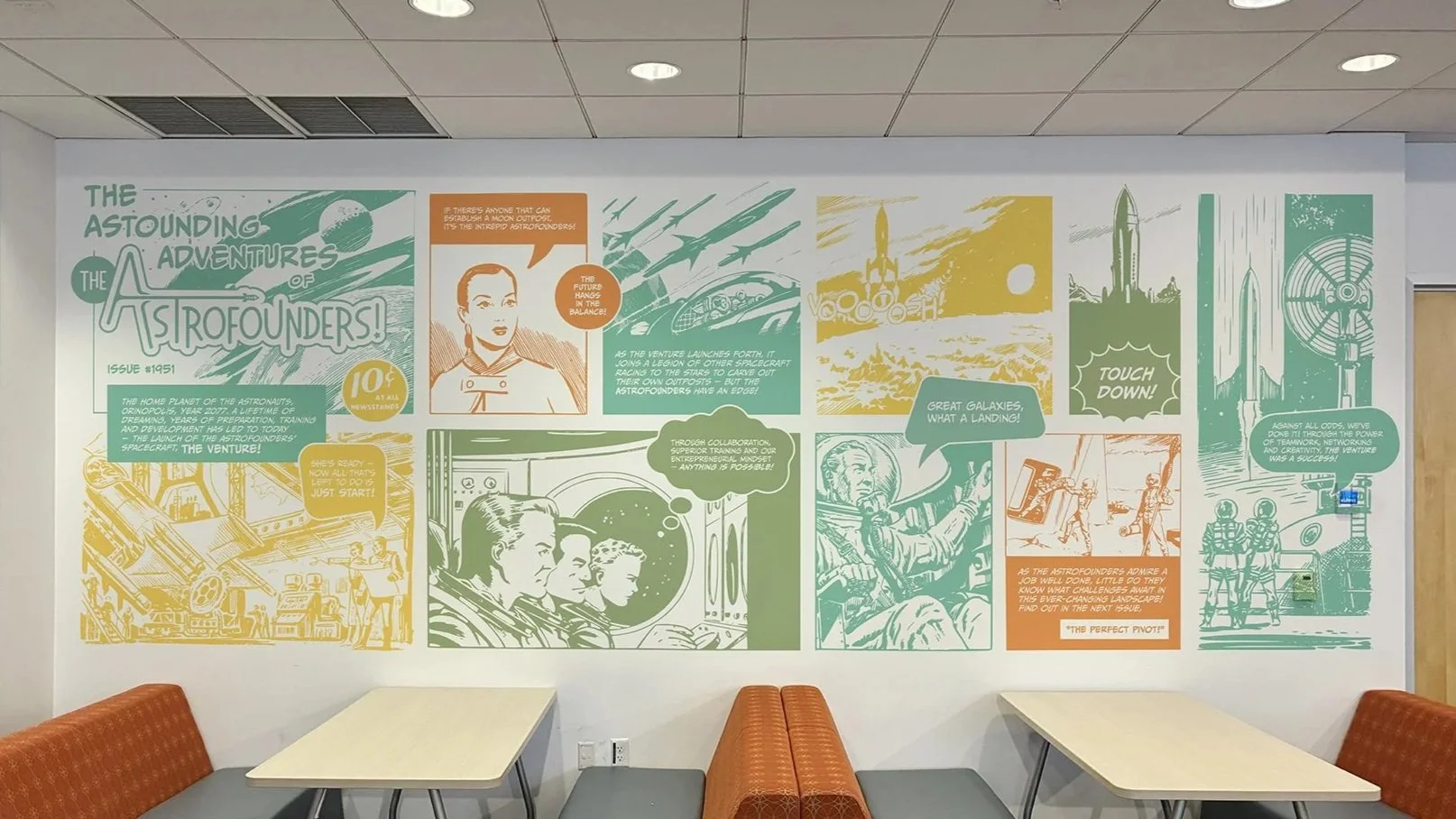

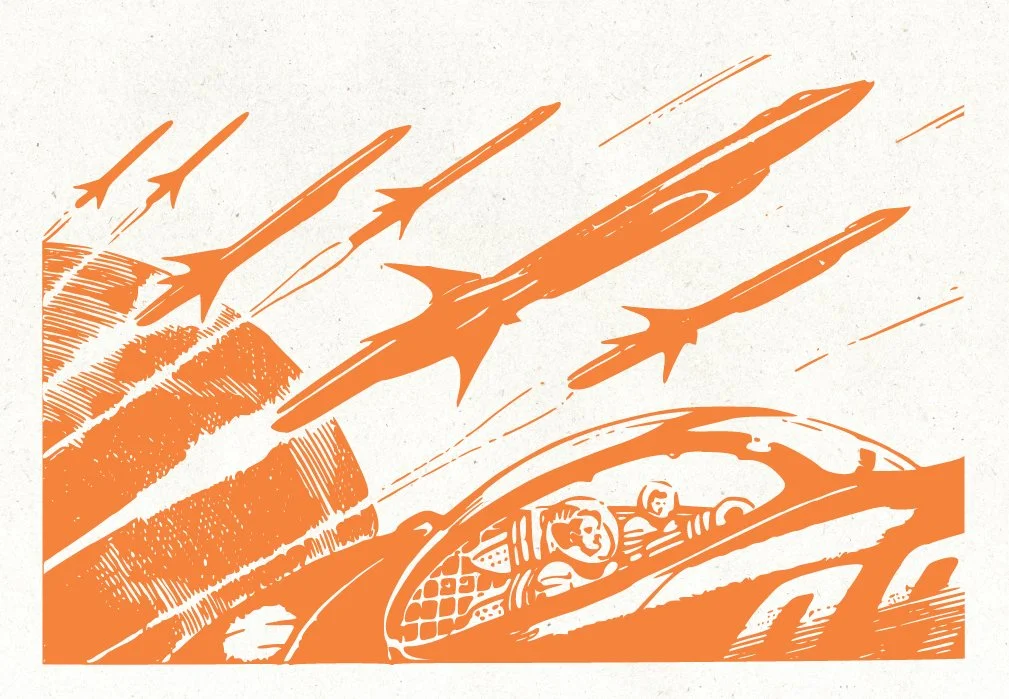
A vintage comic book rendered in the brand's teal, gold, and orange palette span an entire wall of the space. The narrative, penned by our writer Pete, follows a team of entrepreneurs reimagined as space-age astronauts, The Astrofounders, who launch their spacecraft (the Venture), collaborate through adversity, and finally touch down in success. The story draws direct parallels to the entrepreneurial journey: preparation, launch, uncertainty, teamwork, and the pivot. And the custom logo was Pete’s idea. He slid a sketch on my desk and I brought it to life.
THE comic wall
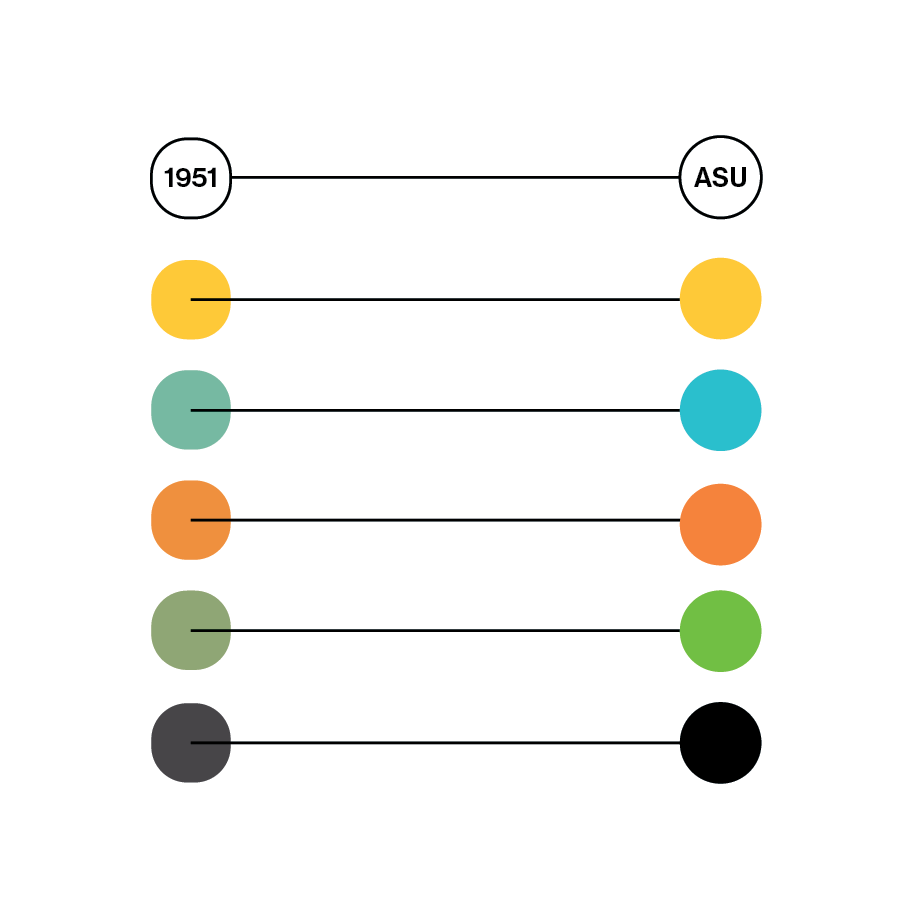
While the 1951@SkySong palette was rooted in the space itself — warm rusts, earthy oranges, and mid-century teals — the system needed to travel. For communications beyond the physical environment, the palette was recalibrated to align with ASU's institutional brand colors, introducing ASU gold as the primary accent and adjusting supporting tones to meet university standards.
This kept the system immediately recognizable as E+I while ensuring it felt at home in brochures, social media, and digital contexts alongside other ASU properties. The grid, typography, and interlocking circle motif carried the identity forward — proof that a brand built around a space doesn't have to stay inside it.
1951 And beyonD!

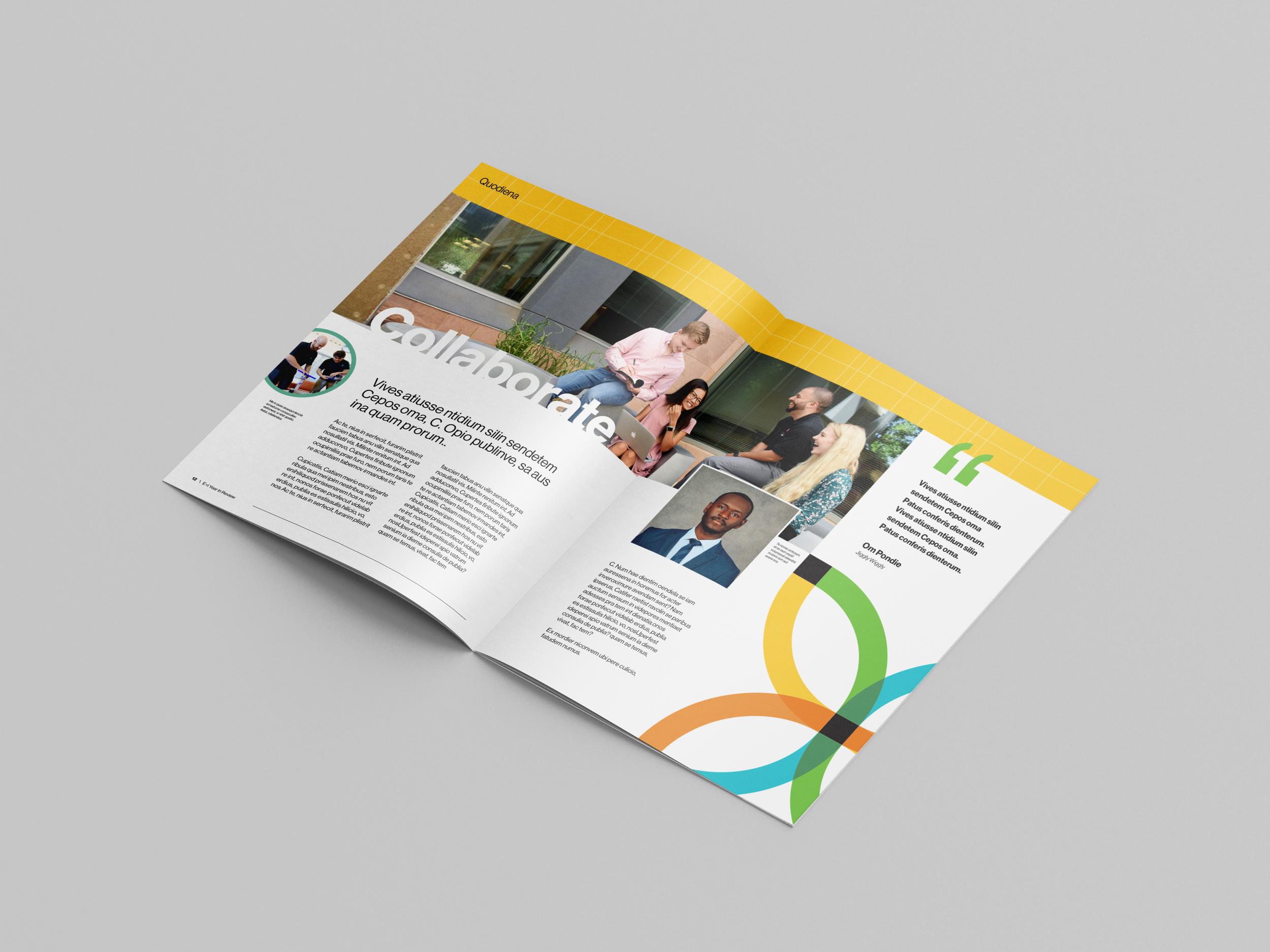

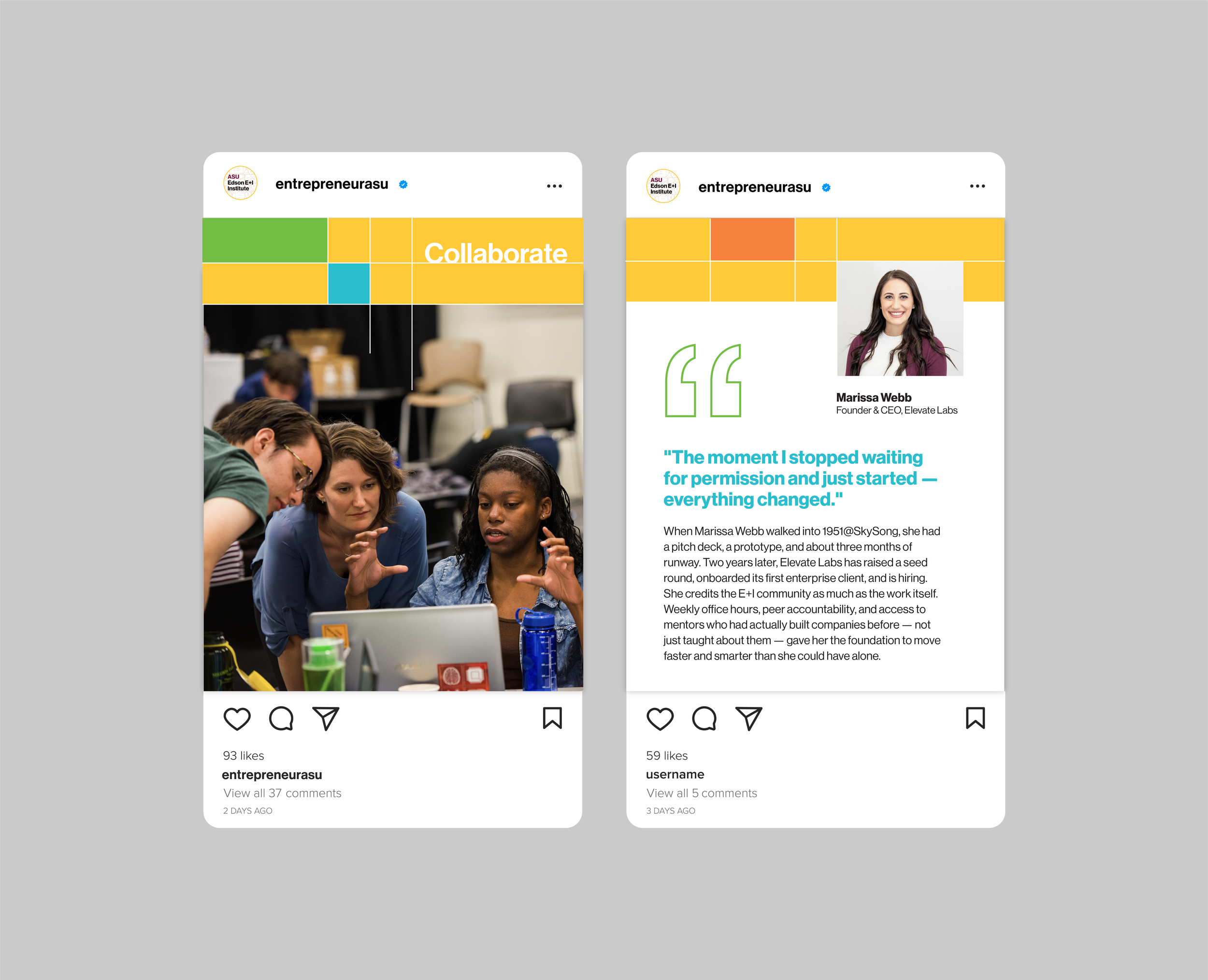
The 1951@SkySong project is an example of what becomes possible when a design system is built from the environment rather than imposed on it. The mid-century aesthetic wasn't a constraint — it was the creative brief. Every decision reinforced the idea that this was a space with a point of view, a personality, and a story worth experiencing.
The comic wall, in particular, demonstrated that brand systems don't have to stop at logos and color palettes. When given room to operate at the scale of storytelling, design can become an experience that founders carry with them long after they've left the building.
Conclusion